

Fibre vs Copper: Choosing the Right Infrastructure for Modern Networks

Modern networks depend on the physical infrastructure beneath them. While fibre is increasingly central to high-capacity data centres and backbone networks, copper remains essential for many short-distance and powered applications. The engineering challenge is not deciding which technology is universally better, but understanding where each performs best.
As organisations adopt cloud services, artificial intelligence, connected devices and increasingly data-intensive applications, network infrastructure is being asked to carry more information at greater speeds and with higher levels of reliability.
For engineers designing and delivering these networks, one of the fundamental decisions remains the choice between fibre-optic and copper cabling. Both technologies are proven. Both continue to evolve. And in many modern installations, both are required.
The right choice depends on the application, distance, bandwidth, environment, equipment, power requirements and expected future growth of the network.
Understanding the fundamental difference
Copper cabling transmits information using electrical signals through conductive wires. Structured cabling systems based on twisted-pair copper have supported enterprise networks for decades and remain widely used for connecting end devices.
Fibre takes a fundamentally different approach. Instead of electrical signals, information is transmitted as light through extremely thin strands of glass or plastic.
That difference gives fibre several important characteristics: it can transmit information across significantly greater distances, support very high bandwidth and is inherently immune to electromagnetic interference. Conventional four-pair copper Ethernet channels are generally designed around a maximum length of 100 metres, while fibre can extend considerably further depending on the fibre type, transceivers and Ethernet standard.
But those advantages do not make copper obsolete.
Where copper continues to perform
For shorter network connections, copper remains extremely practical. A properly designed Cat 6A infrastructure can support 10 Gigabit Ethernet up to 100 metres, making it suitable for a large range of enterprise and building applications.
Copper also has one particularly important advantage: Power over Ethernet (PoE). PoE allows electrical power and data to be delivered through the same network cable. This makes copper particularly useful for wireless access points, CCTV cameras, access-control equipment, sensors, VoIP phones and other connected building technologies.
For many smart-building environments, therefore, copper remains an important part of the physical network.
Where fibre becomes essential
The requirements change when networks need to move large volumes of information over longer distances or support increasingly high-speed connections. This is where fibre becomes particularly valuable.
Data centres, telecommunications networks, campus backbones and connections between technical rooms can require significantly more capacity than conventional horizontal cabling. Fibre provides engineers with the ability to support these higher-capacity links while using relatively compact cabling.
It is also unaffected by electromagnetic interference, making it valuable in industrial and technically demanding environments where electrical equipment could potentially affect copper communications.
Single-mode or multimode?
Choosing fibre introduces another engineering decision: single-mode or multimode fibre. Multimode fibre is widely used for shorter high-speed connections within buildings and data-centre environments.
Single-mode fibre has a much smaller optical core and is designed for substantially longer transmission distances. It is therefore commonly used for telecommunications networks, campus connections, data-centre interconnects and other long-distance applications.
Neither is automatically the correct choice for every project. The optical transceivers, network architecture, expected speeds and future expansion requirements all need to be considered before selecting the fibre type.
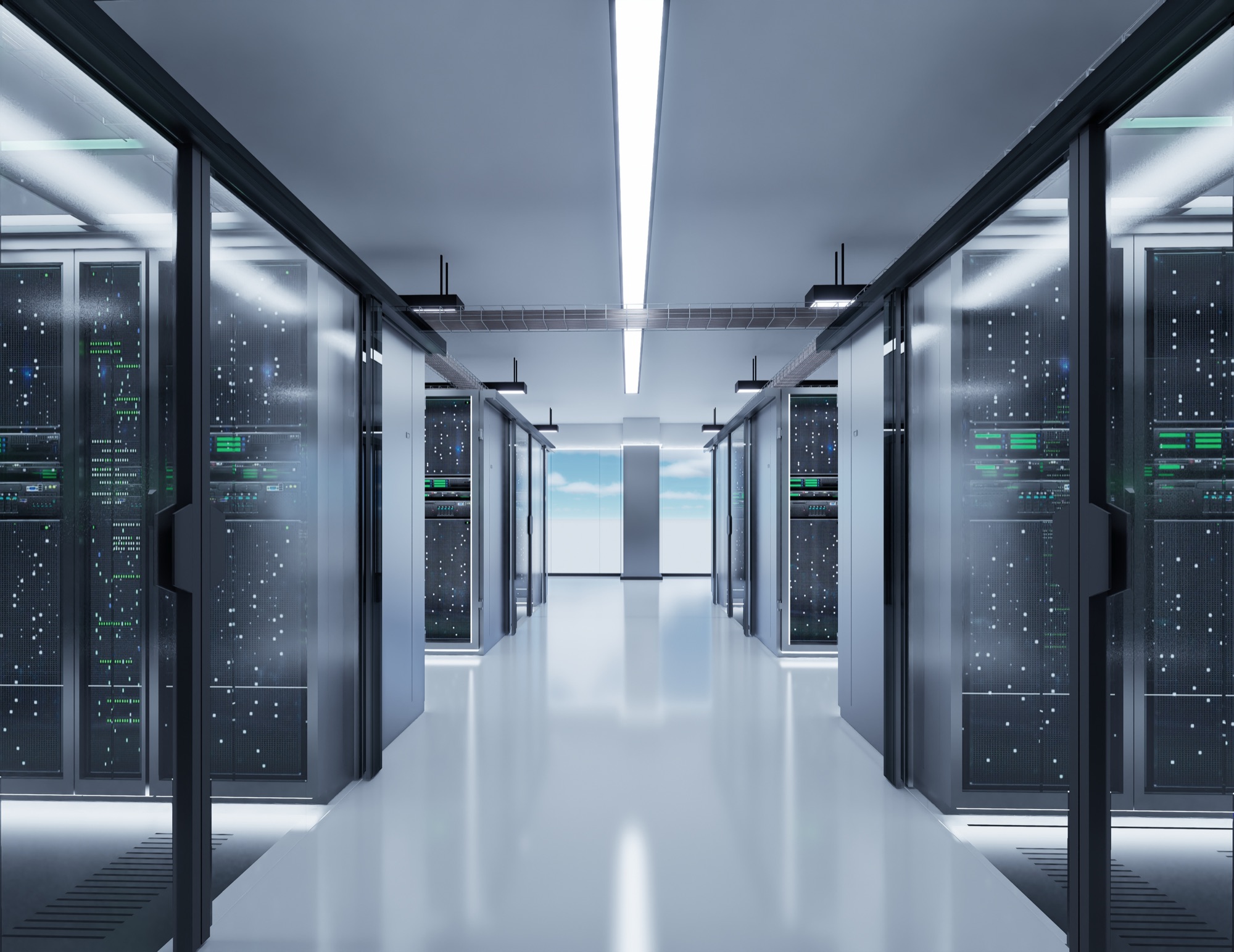
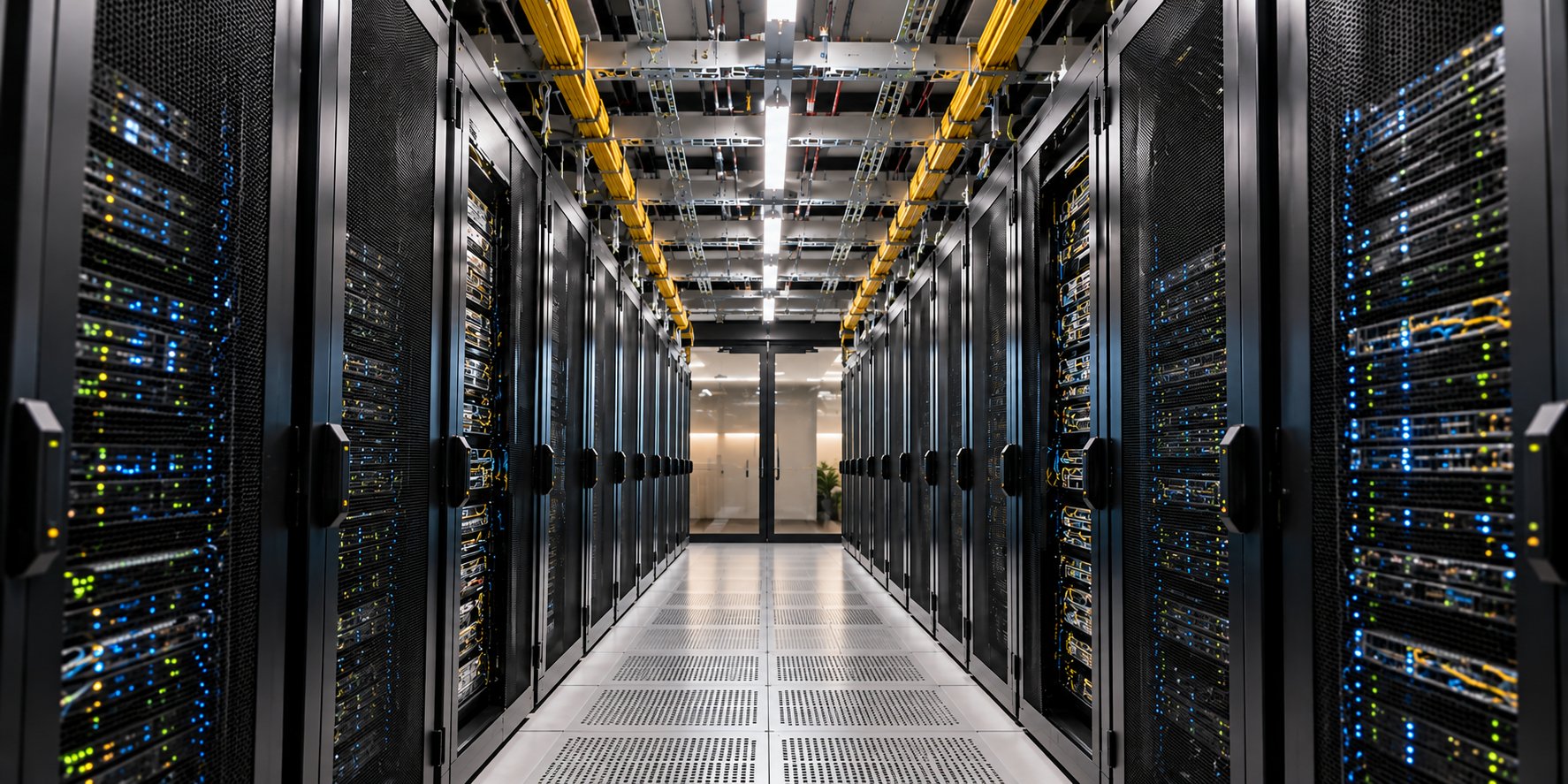
Data centres are changing the equation
Data-centre infrastructure provides a particularly good example of why cabling decisions need to be based on engineering requirements rather than simple preferences.
Increasing server density, cloud computing and AI workloads are placing greater demands on network capacity. High-speed connections between servers, switches and storage infrastructure may need to support enormous volumes of traffic within relatively small physical environments.
At the same time, copper continues to have applications within data centres. The result is not necessarily an all-fibre or all-copper facility. Modern infrastructure can use both media strategically, depending on the equipment being connected and the performance required.
Distance matters
Distance is one of the clearest factors separating the two technologies. Traditional balanced copper Ethernet infrastructure is generally designed around a maximum 100-metre channel.
Within an office floor or between a telecommunications room and an end device, that is often more than sufficient. But when infrastructure needs to connect buildings, data halls, distribution areas or geographically separated facilities, fibre becomes considerably more practical.
Depending on the technology, fibre links can extend from hundreds of metres to many kilometres. The exact supported distance always depends on the selected Ethernet standard, fibre category, transceiver and link design.
Installation quality matters as much as cable choice
Selecting the correct cable is only part of delivering a reliable network. How that infrastructure is installed can have just as much impact on its long-term performance.
For copper systems, engineers need to consider cable category, termination quality, pathway capacity, bend radius, bundle sizes and the effects of power delivery and environmental conditions. Fibre requires equally disciplined installation practices, including cable routing, bend radius, connector cleanliness, polarity, termination, patching and physical protection.
Testing is therefore fundamental to both systems. Copper certification verifies whether the installed channel meets the required performance standard. Fibre installations may require insertion-loss testing, connector inspection and depending on project requirements, OTDR testing.
A cable being physically connected does not necessarily mean that the infrastructure has been correctly delivered. Installation, testing and documentation complete the engineering process.
Designing for tomorrow, not only today
Another important consideration is the expected life of the infrastructure. Servers, switches and active network equipment may be replaced several times during the operational life of a building or data centre. Replacing the underlying cabling can be considerably more disruptive.
Infrastructure should therefore be designed with future requirements in mind. Engineers need to consider not only the bandwidth required today, but potential expansion, higher network speeds, additional devices, new equipment and changes in network architecture.
Fibre can provide significant scalability for backbone and high-capacity environments. Copper can provide a flexible and cost-effective solution for shorter connections and applications requiring PoE. A well-designed network uses those strengths appropriately.
It is not fibre versus copper
The question is often presented as a competition: Which is better, fibre or copper?
For modern infrastructure, that is usually the wrong question.
A more useful question is: What does this particular connection need to achieve?
If the requirement involves long distances, very high bandwidth, backbone connectivity or environments affected by electromagnetic interference, fibre may be the appropriate engineering solution. If the requirement involves shorter distances, conventional Ethernet devices or delivering both power and data to connected equipment, copper may make more sense.
Increasingly, sophisticated networks use both. The objective is not to select one technology and apply it everywhere. It is to create an infrastructure architecture in which each technology is used where its characteristics provide the greatest value.
Engineering the physical layer
As digital systems become more sophisticated, it can be easy to focus attention on cloud platforms, applications and software. But every digital service eventually depends on physical infrastructure.
Cables, connectors, pathways, patch panels and network equipment form the physical layer through which information actually travels. Designing that layer correctly requires consideration of capacity, distance, resilience, power, environment, maintainability and future expansion.
Fibre and copper will therefore continue to coexist across modern networks. The engineering value comes from knowing where to use each one, how to install it correctly and how to verify that the finished infrastructure will perform as designed.
Latest thinking • Industry Insights .