

Why Connectivity Has Become Critical Infrastructure

Connectivity is no longer simply about getting online. It has become part of the essential infrastructure supporting businesses, public services, data centres, cloud platforms, artificial intelligence and everyday life. As digital dependency increases, the networks operating behind the scenes are becoming as important as the services built on top of them.
Connectivity is becoming essential infrastructure
Modern organisations depend on connectivity for cloud computing, cybersecurity, communications, payments, logistics, industrial automation, remote monitoring and access to business-critical information. What was once treated mainly as a communications service now underpins core operational processes.
The European Union’s Digital Decade targets gigabit connectivity for all households and 5G coverage across populated areas by 2030. Fibre-to-the-premises has also become an increasingly important part of Europe’s fixed-network landscape. The direction is clear: high-capacity connectivity is being treated as foundational economic infrastructure, not simply a consumer convenience.
The infrastructure behind the connection
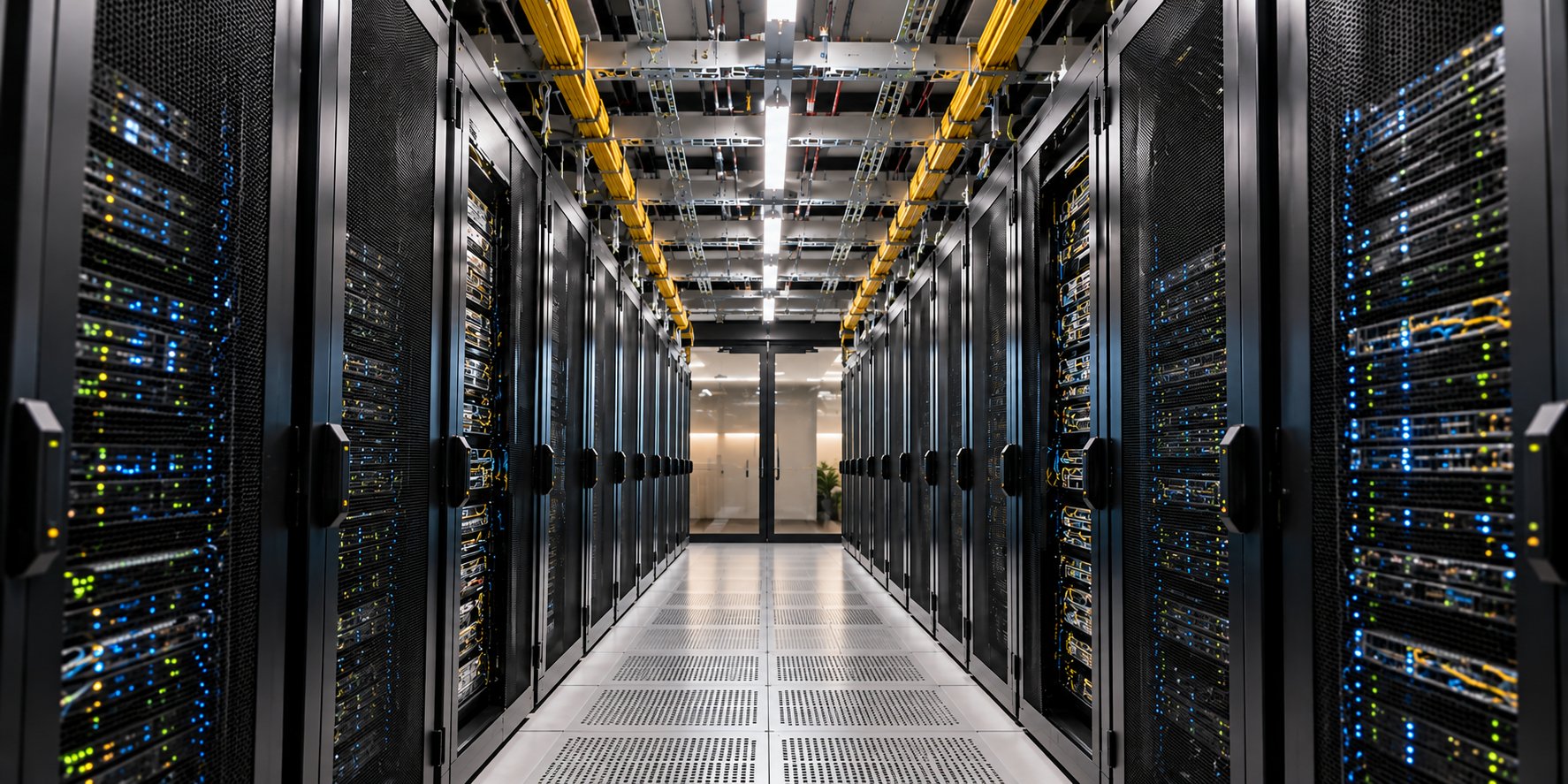
Every apparently “digital” interaction relies on physical assets. Fibre-optic networks carry data between buildings, cities and countries. Data centres process and store information. Structured cabling connects equipment within facilities. Mobile networks extend access beyond fixed connections, while power, cooling, monitoring and security systems keep those environments operational.
This makes installation quality consequential. Cable pathways, fibre terminations, patching, testing, labelling and documentation may be invisible to end users, but they directly affect maintainability, resilience and the ability to expand a network safely.
AI is increasing pressure on digital infrastructure
Artificial intelligence is adding another layer of demand. Training and operating advanced AI systems requires substantial computing capacity, much of it concentrated in data centres and connected through high-bandwidth networks.
The International Energy Agency has projected global data-centre electricity consumption could reach around 945 TWh by 2030, with AI among the major drivers of growth. The impact extends beyond power: additional compute capacity creates demand for new data-centre space, fibre connectivity, cooling, resilient electrical systems and higher-density network infrastructure.
The growth of AI is therefore not only a software story. It is also an infrastructure story.
The digital divide has not disappeared
Despite rapid technological progress, access remains uneven. ITU estimates continue to show billions of people without internet access, with particularly large gaps between higher- and lower-income economies and between urban and rural communities.
Coverage alone is not enough. Meaningful connectivity also depends on sufficient speed, low latency, affordable service, adequate data allowances and access to capable devices. Extending those benefits requires investment in fibre, towers, data centres, backhaul and other physical network assets.
Fibre remains fundamental
Wireless technologies are highly visible to users, but fibre remains one of the foundations of modern connectivity. Mobile networks depend on high-capacity backhaul; data centres require extensive internal and external fibre; and enterprises increasingly need dependable links to cloud and colocation environments.
Fibre’s bandwidth, latency characteristics and scalability make it particularly important as traffic volumes increase. Europe’s Gigabit Infrastructure Act is intended to make deployment of very-high-capacity networks faster and more cost-effective, including through better access to existing physical infrastructure and improved coordination of civil works.
Reliability matters as much as speed
Bandwidth is only part of the equation. In critical environments, availability and resilience can be equally important. A high-capacity connection has limited value if a single failure can interrupt operations.
Resilient infrastructure can involve diverse fibre routes, redundant equipment, resilient power, disciplined installation, comprehensive testing and accurate documentation. Inside data centres, the same principle applies: small physical-layer problems can become operational problems as environments scale.
Security is part of the connectivity equation
Greater connectivity also expands the digital attack surface. As organisations connect more systems, devices and locations, network infrastructure becomes part of a broader security architecture.
Physical and digital security increasingly overlap in critical facilities. Data centres combine network controls with access control, CCTV, monitoring and physical protection, while telecommunications infrastructure must be designed with both resilience and security in mind.
Building the infrastructure for what comes next
AI, cloud computing, connected industry, smart cities, edge computing and increasingly autonomous systems will all require larger volumes of data to move quickly and reliably between devices, networks and data centres.
The applications people use may change rapidly, but the underlying requirement remains consistent: reliable physical infrastructure capable of connecting everything together. That means continued investment in fibre networks, data centres, mobile infrastructure, structured cabling, power, cooling and security systems together with the skilled people required to install, test and maintain them.
Connectivity has moved beyond convenience. It is becoming one of the foundations on which modern economies operate and the quality of the infrastructure behind it will increasingly influence how reliably, securely and efficiently the digital world can grow.

Latest thinking • Industry Insights .